larryhammer: Yotsuba Koiwai running, label: "enjoy everything" (enjoy everything)
Yes, it really has taken me this long to get around to acquiring the licensed version of Yokohama Kaidashi Kikou, my second-favorite* manga. I have no excuse. Especially since, so far, the translation is looking pretty good.


* Favorite is Yotsuba&!, of course. I also like Aria but, honestly, the anime really is better.


---L.
larryhammer: text: "space/time OTP: because their love is everything" (otp)
A question for those of you who know about such things, or at least know more than I do.

Is there a term for a series where internal and external chronologies are supposedly tied but in fact slip relative to each other? That is, where installments are supposed to take place at the time of release, as evidenced by direct dates or dateable public events, but the installments appear over a longer span than internal chronology.

As an example, and what sparks my query, the Chalet School books by Elinor Brent-Dyer. The first 14 books were published between 1925 and 1940, with #2 set in 1925 at the latest, given the Robin’s history and age, and #14 explicitly starting in February 1938, in the run-up to Germany’s annexation of Austria, while also explicitly taking place eight years after #1—the series consistently establishes an internal timeline with references to events of previous volumes, and this is no exception. (In general, the books came out annually but covered a triannual term, only occasionally skipping terms.) A couple volumes in the middle there can also be tagged to the time of writing / publication.

Another case is Yotsuba&!: per the author, each chapter takes place in the year it’s serialized even though by internal chronology six months pass over the 15 volumes published since 2003—thus justifying how tech, styles, and car models are of their time. I’ve met a couple others, and I’m sure people can name more.

But is there a term for this sort of thing? Or do we need to coin one?

ETA: Floating timeline it is. (hat tip)

---L.

Subject quote from Comfortably Numb, Pink Floyd.
larryhammer: a wisp of smoke, label: "it comes in curlicues, spirals as it twirls" (what tangled tales we weave)
Since all knowledge is contained somewhere out there, an open request for advice:

Since I'm unlikely to ever reread Marmalade Boy or Kodocha and we are pruning for space, it's time to sell them off. However, given the difficulty I had assembling the complete series, I suspect that if offered in the right venue, we'd get enough more than from the local used bookstore chain (typically $2/volume) to make it worth the bother.

Am I likely correct? If so, where do you recommend?

---L.

Subject quote from "Tank!," Yoko Kanno.
larryhammer: floral print origami penguin, facing left (disappearance)
Vienna Teng's concert was pretty dang tasty -- playlist included "Harbor," "Blue Caravans," all but one song from the new album, and an encore of "Grandmother Song". "The Hymn of Acxiom" comes off startlingly well live. Alex Wong was part of the band, as usual, and opened with some pretty good songs from his recent solo project. And I am still tired from driving up to Phoenix and back.

None of which is about reading, heh. So:

What I've recently finished since last post:

The Analects along with A Reader's Companion to the Confucian Analects by Henry Rosemont. No, I don't even know why.

A Bride's Story volume 5 by Kaoru Mori. Man, her art keeps getting better and better -- the linework is cleaner than in volume 1 while still rendering all the gorgeous period and location details (how does that even work?). And the composition of landscape panels! Also, yay finally transitioning back to Amir's plotline.

Mahôka Kôkô no Rettôsei volume 10, the middle installment of a three-part novel, ending with even more of a cliff-hanger than the first. Satô continues to expand the consequences of his worldbuilding, to good effect. Well, good story effect -- this is not a good world to live in. (And -- ah -- I see an anime has been green-lit. Not at all surprised.)

What I'm reading now:

Hikaru ga Chikyû ni Itakoro... ("When Hikaru was in the world," I think?) volume 1 by Mizuki Nomura. Hikaru Mikado, teen lady's man and the "prince" of exclusive Heian Academy, has just drowned and the only person who can see his ghost and so help him fulfill a birthday promise to his fiancee Aoi is our gruff, anti-social protagonist, Koremitsu. Cue an exercise in stuffing as many Tale of Genji references as possible into a contemporary high school setting. This is the start of a series where each volume focuses on another heroine named from the source material -- for like Hikaru Genji, this Hikaru is a skank. Entertaining so far, though -- hmm -- it's been a week since I touched it.

Manga de Dokuha volume 76 Hyakunin Isshu, a study-guide manga of One Hundred People, One Poem Each -- a gift from our neighbor's mother. So far it has stuck to thoroughly traditional interpretations -- Tenji's #1 is both a field watchman getting dripped on+crying and codedly an emperor's crying over his people's troubles during civil war, Komachi's #9 is a purely seasonal poem, and so on. Utako ("poem-girl"), our "navigator" through the poems, is cute, despite the vaguely creepy permanent blush-stickers that hover above her cheeks so her hair sometimes slips behind them. I probably shouldn't be as pleased as I am at how easy I find this to read, given a) I have a leg up on the subject and b) its genre is supposed to be easy.

Another couple chapters of White-Haired Demoness by Liang Yusheng, and then the first quarter of Divine Eagle, Heroic Companion aka Return of the Condor Heroes by Louis Cha. I, uh, peeked at the opening in passing and got snorked in. Starts a decade after the first of the trilogy ends, but then adds several years of training montages to grow the next generation up enough they can take center stage. There's some good angst material here in a taboo romance between martial arts master and student, if you're into that sort of thing.

What I might read next:

A lot of Jesus/Voltron fanfic? I dunno ...

---L.
larryhammer: floral print origami penguin, facing left (completed)
What I've recently finished since my last post:

Poems of Places volume 23 -- ah, India. Maybe one day I'll find a Desi-written and -edited anthology of poetry in English. Which this is decidedly not. The brief China portion also has very little translation, though it includes a surprisingly decent version of "Mulan"; in contrast, the bulk of the even smaller Japan is translations, but their quality is ... not good.

AKICOLJ question: ANY RECS for an Indian poetry anthology?

Yokohama Kaidashi Kikou volumes 11-14 + epilogue by Hitoshi Ashisano (reread). As usual, the final volume is an escalating series of sucker punches in the gut, all while retaining the series' signature gentle, cosy-apocalypse tone -- which adds to the effect. The kicking, though, actually starts at the end of volume 13 with the first explicit acknowledgement of just how much time has just been passing. So, so good, this series.

H2 volumes 1-34 by Mitsuru Adachi, a binge reread of one of his three great series (the other two being Touch and Cross Game). I hadn't meant to do more than peek at something in passing and got sucked in. Series summary in this post about Adachi's works. What strikes me this time is that the symmetry is almost too rigid: one of the two female lead's agency is taken away essentially because the other female lead is indecisive -- if one is in stasis, the other had to also not move, but no character-appropriate reason for her doing so is not given. Still, a very good and emotionally smart manga. Highly recommended. (But not as much as Cross Game. Which, come to think of it, also has a major female character forced into stasis by structural considerations.) Note: minimal knowledge of baseball is needed as Adachi explains enough on to convey the emotional importance of what's going on, which is what matters, and indeed at his best the sports action is a vehicle of character interactions rather than being the main story.

Other manga include: 1) 7 Seeds volumes 1-6 by Yumi Tamura -- these also being rereads, as I'm catching up by starting over in the beginning. Post-apocalyptic science fiction serialized in a magazine aimed at younger adult women, so it's as much about the memorable characters and relationships as the survival stories; strongly recommended. 2) Aoi Hana aka Sweet Blue Flowers volumes 1-8 by Takako Shimura, also a partial reread + finishing the series.

What I'm reading now:

A Dream of Red Mansions, of course, though I seem to have read only a single chapter since last post. Oops. Also still reading Legend of the Condor Heroes by Louis Cha, also not getting very far. My bad. Plus about the first half of Ichiban Ushiuro no Daimaô volume 7 before DNFing it into the bitbucket this morning. Not a good couple weeks for prose.

For Poems of Places, I'm skipping the Africa volume for now, even though the bulk of it is really All About Egypt, because it looks potentially even more dire than India, and looped back to the start and the British Isles, which I skipped over: volume 1 is England A-F. (For the record: four volumes of England, one of Ireland, and two-point-five of Scotland, with the other half Scandinavia.)

And continuing volumes of 7 Seeds.

What I might read next:

Once I finish Condor Heroes, probably The Sword and Exquisiteness by Gu Long. Otherwise, whatever catches my fancy.

---L.
larryhammer: floral print origami penguin, facing left (some guy)
What I've recently finished since my last post:

"Sword of the Yueh Maiden," by Jin Yong/Louis Cha, a wuxia short story by one of the modern masters of the genre. It's the last new thing he wrote (he's spent the last 40 years publishing revisions to his older books) and set in the earliest historical period, in either the Spring and Autumn or the Warring States era -- I honestly can't tell the difference. An okay story, regardless, though it felt like it could have fruitfully been developed into something more novella length.

Yokohama Kaidashi Kikou volumes 8-10 by Hitoshi Ashinano (reread). The first two are the wanderjahr-and-return volumes -- which are cool and world-expanding and character-defining, but I still like better the stories with Alpha in the last lonely cafe at the end of the road.

Poems of Places volume 22, covering the rest of the Near East. Orientalism A-hoy! picks up in full earnest with Arabia and Persia. I am pleasantly surprised by the number of poems, some of them translated, that are straight-up sympathetic to Islam -- especially after the notable lack of same for post-Biblical Judaism in the Levantine volume or elsewhere. (BTW, In case I haven't made it clear through my intermittent sniping, I've very much been enjoying this anthology: it has introduced me to a large body of perfectly competent but otherwise forgotten poetry, and Longfellow had a good eye for the evocative, if not always for what it's evoking.)

What I'm reading now:

Story of the Eagle-Shooting Hero aka Legend of the Condor Heroes by Jin Yong/Louis Cha, the first of the Condor trilogy. Wuxia set at the end of the Southern Song/Jin dynasties, with Mongols gathering strength on the northern horizon (several early chapters take place in the camp of the khan who becomes known as Genghis). And oh yeah, it's wuxia -- a sprawling story of wandering martial artists, sworn brothers, battle couples, honor above reason, wagers and grudges that span decades, treachery, and frequent encounters with someone whose kung fu is stronger than yours. Unless, of course, it isn't. Just don't ever mess with any passing Taoist priests. It is strikingly easy to visualize the fights scenes in the conventions of wuxia movies, making it clear the two formats developed together. I am amused that the main hero is, to put it mildly, not the sharpest arrow on the steppes and more determined than talented, as well as by how many laugh-out-loud moments there are. Am at the start of volume 4 (of 4 -- Chinese novels: not short). (The historical events behind "Sword of the Yueh Maiden" are, heh, referred to several times in this one.) (Eventually I'll do the obligatory comparison to Red Mansions.)

(Speaking of which,) am up to chapter 10 (I think?) of A Dream of Red Mansions, with the main storyline finally fully under way. The approach to the first scene with all parties of the primary romantic triangle (if a structure this complicated can be said to have a primary entanglement) was surprisingly understated but resulted in a remarkably vivid scene. By the time it's done, you know to pay attention to the two women who each share with the hero a character of his personal name.

Cycling back to Poems of Places, have started volume 23, being almost entirely India -- with Orientalism A-hoy! even more thickly laid on. Thick enough to be pretty painful in parts. I suppose 1879 was too soon after the so-called Sepoy Mutiny to expect anything remotely sympathetic to it.

Also, am still stuck in 45 of Orlando Furioso by Ariosto (Rose), though I still made some progress. I don't know whether it's this translation or my age, but I have less patience with this denouement than in past readings. I should just sit down and bull through the rest. That or write the fanfic in which some wuxia knights-errant wander through wrecking merry havoc with the plot.

What I might read next:

After Eagle-Shooting Hero, before continuing the Condor trilogy I may try either Liang Yusheng's White-Haired Demoness (the source novel for The Bride with White Hair) or something by Gu Long. Just to triangulate wuxia voices. I also have an incomplete translation of Wang Dulu's The Crane Startles Kunlun, the first of the pentalogy that includes Crouching Tiger, Hidden Dragon, but having read the manhua adaptation, that's less pressing.

---L.
larryhammer: floral print origami penguin, facing left (some guy)
What I've recently finished since my last post - in this case, three weeks ago:

The Silver Branch by Rosemary Sutcliff -- finished the day of the last post. I cannot help but wonder that as part of the novel's effect Sutcliff was relying on her reader's reactions to Cullen with his titular silver branch -- ones that, half a century later in a different culture, I simply don't have. Or maybe it's just a flatter story.

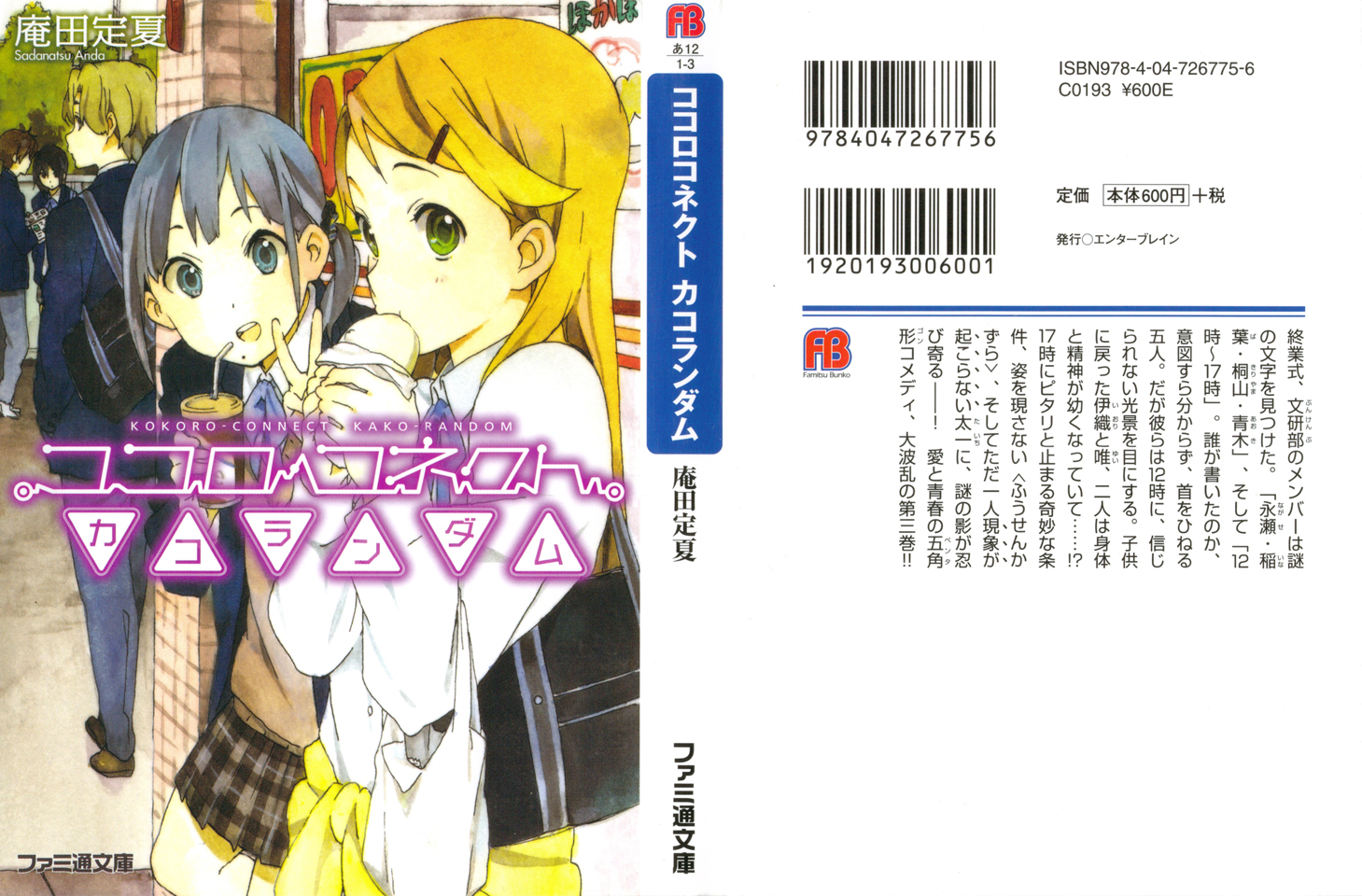
Kokoro Connect volumes 2-3 by Sadanatsu Anda. Apparently I never mentioned reading volume 1 last year? Or at least, I can't find the post. Five high school students become subjects of psychological experiments by a mysterious inhuman entity called Heartseed (fûsenkazura). In the first volume, they are subject to randomly swapping bodies, in second, to acting at random times on their immediate impulse -- later volumes involve other tests. As one might hope, each character is well-defined and their reactions are appropriately various -- especially as this brings out how past traumas produce different scars in different people. I am, btw, quite taken with the style of the covers, which are drawn (by the character designer of K-On!) as candid photos of teenagers messing around -- volume 3 illustrates this particularly well, with one character noticing the "camera" and posing for it before another can react. Recommended. The only reason I did not continue the series is that hospital waiting rooms are not the best place for teen angst novels, however well handled.

Poems of Places ed. Henry Wadsworth Longfellow volumes 9-10, being the tour of France, volumes 14-15, of Spain, Portugal, Belgium, and Netherlands, and the second half of volume 16, Austria (I read the first half, Switzerland, last year). This is, um, a lot of poetry -- each of these volumes is a good-sized anthology of its own -- but mental travel fit the bill in said waiting in hospitals.

Yokohama Kaidashi Kikô v6 by Hitoshi Ashinano. This is where Alpha finally uses the "everybody's ships" metaphor -- much later than I'd remembered, given how important it is to the series: as a near-immortal robot, she stands on the shore while human ships sail on. It isn't used often, but it will pack an emotional punch when it returns.

Trent's Last Case by E.C. Bentley. Sadly, this is an early Golden Age mystery completely devoid of clerihews. I am most disappointed. In all other genre respects, it served quite nicely, especially as an example of playing with genre tropes even as they are being codified.

Glimpses of Unfamiliar Japan, First Series by Lafcadio Hearn, which I've been poking at off-and-on over several months as the mood hit me, and only finally finished.

What I'm reading now:

Poly-Olbion by Michael Drayton -- am up to song 17, more than halfway through, though we've only just reached London. Presumably tourism of parts north will get more hurried, though hopefully not in a "if it's Tuesday, this must be Amsterdam York" sort way. I'm finding the bits of embedded history lessons interesting enough that I want to read the pre-Norman volume of Holinshed. Which I may want to anyway.

Popular Songs and Ballads of Han China by Anne Birrell, being heavily annotated translations of folk songs collected, or in some cases written, by the imperial Music Bureau (yue-fu) between roughly 200 BCE–200 CE -- so the true old stuff, rather than the literary poems in the style of same I'm familiar with from Tang writers.

Poems of Places volume 17, being the first half of Germany. So far, the nationalism is notably stronger than in previous volumes -- I wonder whether the timing of unification, just before this was compiled, had any effect here. Also, less Goethe than I expected.

(Prose? What prose?)

What I'll read next:

On to Sutcliff's The Lantern Bearers as soon as I pick up my reserve at the library, and probably Kokoro Connect volume 4. The second series of Glimpses of Unfamiliar Japan could also sneak in there somewhere. And more poetry, like as not. Just a guess.

---L.
larryhammer: floral print origami penguin, facing left (anime)
The traveling Miyazaki/Ghibli retrospective is in town at our local arthouse cinema, and last night we saw Castle in the Sky/Laputa. I don't generally do a lot of fannish shipping, but Pazu/Sheeta? -- totally my OTP.

And speaking of whom:

Hayao Miyazaki on the flawed concept of "Good vs. Evil" as illustrated by Ashely Allis. (via)

An overview of the career of Keiji Nakazawa, Hiroshima survivor and creator of Barefoot Gen, who died last month. (via)

A field guide to North American dim sum. (via lost in browser tabs)

---L.
larryhammer: Yotsuba Koiwai running, label: "enjoy everything" (enjoy everything)
The final English volume of Adachi's Cross Game is out, and in my hands. Needless to say, this calls for a reread of the whole series. I'll be back in a bit.

Though first, I should mention that [livejournal.com profile] stillnotbored's November first line contest is on. Go, be creative, get stuff.

But as for me, there's an archive binge with my name all over it.

---L.
larryhammer: Enceladus (the moon, not the mythological being), label: "Enceladus is sexy" (astronomy)
Curiosity panorama. (via)

OMG is almost 100 years old. (via lost in browser tabs)

I still really like the statement "Kasane is your average kendo-obsessed girl." Because, yanno, reasons. (This is the start of the description of the manga series Sengoku Strays, in which said kendo-obsessed girl timeslips to 1552 and becomes a retainer of Oda Nobunaga. As one does.)

---L.
larryhammer: floral print origami penguin, facing left (completed)
Books recently devoured upon arrival in-house:

Cross Game v7, Mitsuru Adachi - Contains v14-15 of the Japanese edition -- one more volume to go. I am once again reminded of just how good Adachi is at storytelling, as the implications of the events of v6 continue to reverberate and the characters prepare for the climactic summer qualifying tournament. (I use "reverberate" deliberately -- echoes, structural and ironic, are a major tool in his kit.) Highly recommended, still.

Girl Meets Boy, Ali Smith - This is billed as a retelling of Iphis and Ianthe, but it's not so much that as a genderqueer romance with characters conscious of Ovid -- including two separate summaries of Ovid's version, one told in character. A fun, breezy read, though the partial implication that one solution to the problems of the world is to go Brazil-ending is not as encouraging as was probably intended.

Fly by Night, Frances Hardinge - I want to sit this book down in a locked room with Westmark and then eavesdrop as they try to figure out whether how much to trust each other, and what's to be gained by turning the other in. Wonderful evocation of pre-modern espionage, even though too much time is spent without the goose. I am inexplicably without the sequel.

The Sound of Waves, Yukio Mishima - I gather this is the Mishima novel I'm most likely to connect to. I must say, it's a good unraveling of exactly why secret lovers in Japanese poetry angst over discovery so much. I get the very strong impression that, even though the heroine is (like the hero) so very much An Ideal it's not even funny, Mishima did not like women. I also get the impression Mishima preferred the unreflective type in his boy-toys. All carping aside, I like the story itself -- I'm guessing it's in some sense based on Daphnis and Chloe? The parallels are too strong to not be deliberate, but was it direct or indirect influence is the question.

Books taking longer to digest:

Uncovering Heian Japan: An Archaeology of Sensation and Inscription, Thomas LaMarre - The odd subtitle obscures that this is really a study of the poetics of Kokinshu-era poetics and its entanglement with calligraphic styles (so nothing as expansive as the main title suggests). It's thinky enough that I have to take time off every five pages to process. It probably helps that I was already, in my own unsystematic way, already working toward some of the author's arguments (regarding the relationship between pivot-words and names-of-things poems), but other parts, I don't yet understand enough to evaluate.

A Waka Anthology, volume 2: Grasses of Remembrance, Edwin Cranston - 1100 folio pages do not go down in a single gulp. Or even two.

Tsunaide Tsukurou: Yunitto Origami (roughly,* "Let's Connect and Make: Unit Origami"), Tomoko Fuse - It is likewise impossible to rush through an origami book -- all the more so for unit origami.** Fuse is one of my three favorite origami artists,*** and this book hasn't been translated, that I'm aware of -- found in used book store's foreign-language section, along with several Japanese origami books from the library of someone from Alberta. I kept myself to under five, but snagged all of Fuse's, and I started on this as the looking the most interesting.

Haiku: The Poetry of Nature, ed. David Cobb - On the other hand, while it's possible to read a haiku collection in a single sitting, doing to so pretty much misses the point. This one has a pretty good mix of traditional and modern poets, generally in reasonable translations, plus lots of pretty pictures from the Japanese collection from The British Museum.


* This can probably be rendered more idiomatically.

** The domain of such implied instructions as "Now make 19 more of those so we can assemble them."

*** Robert Lang and John Montroll.


---L.
larryhammer: floral print origami penguin, facing left (manga)
ETA: Sale long since over.

We're culling bookcases (desperately overcrowded, need to create space), and while most is going to our local big box used book store, among the miscellaneous manga in English are a few complete series that someone here might want to snag first. Especially, possibly, the out-of-print ones. They're all good -- good enough to I held onto them at least, and I've reread some. But I'm not likely to again.

Cat Paradise vol.1-5 - $20 claimed
Yurara vol.1-5 - $20
ES (Eternal Sabbath) vol.1-8 - $32
After School Nightmare vol.1-10 - $40
Mars vol.1-15 - $60

All prices US$. Shipping is included within the United States -- to anywhere outside, I'll be adding the cost to the total. First come first serve.

---L.
larryhammer: floral print origami penguin, facing left (revolutions)
Some things I've been reading lately:

Picture of Dorian Gray, Oscar Wilde - Finally got to this -- I know, I know, but rather than play the blame game, let's just move on. Specifically, I read the original 1890 magazine version, before Wilde toned down the "immorality" and padded out the backstory. Initially, it appears to be a homoerotic love triangle wrapped in gobs of enormously entertaining piffle (I hadn't known it was possible to talk in paragraphs of epigrams -- I must reread to figure out how Wilde pulled that off), but then genre-shifts to something that tries to be a morality play but ends up a gothic melodrama. Unfortunately, those parts without Lord Henry on stage, which is most of the moral-playing, has very little piffle, forcing the story to succeed on its own slight merits. Recommended for anyone who hasn't read it, with the understanding that it's okay to stop at the time-skip.

Much like many manga, if it comes to that. And speaking of manga:

Last Game, Shinobu Amano - Recommended for fans of Akagami Shirayuki-hime, Kimi ni Todoke, and Special A, as unlikely a combination as that may be. This is technically mainline shoujo (it runs in LaLa) and certainly is playing many shoujo tropes, but the main story takes place while the characters are in university. Thus showing audience expectations are not as set in stone in Japan as in the States.* The main characters are a poor but hardworking girl of limited emotional affect and a privileged rich boy who can't get over how she always beats him academically. After several years of one-sided rivalry, in high school he eventually hits on his plan of revenge: make her fall in love with him, and then dump her.

Because this trick always works.

It isn't until they're in university that he realizes his obsession with her includes no small amount of attraction to her -- and she in turn, after deciding to put new effort into making a friend (or even two), starts showing signs of being not indifferent to him. Not that she quite understands what's going on herself, being a little inexperienced at this whole socializing thing. And at emotions.

The art and characterization is very similar to Sorata Akizuki's, though the latter is not as delicate with Amano, and the sense of humor similar to Karahu Shiina's. The tropes, they are legion, both played with and played straight. I'm having a lot of fun with this one. Unlicensed, scans available through chapter 9 (which should be early volume 3 when the tankobon comes out). And speaking of fun:

The Ingoldsby Legends, "Thomas Ingoldsby" aka Richard Harris Barham - You can find references to this in novels throughout the second half of the 19th century and the first quarter of the 20th, but after that it seems to have become largely forgotten** except for a single anthology piece, "The Jackdaw of Rheims." Which is a shame, as Barham is a dab hand at comic narrative verse -- he knows how to keep the pace up and not get bogged down in clever rhymes and cleverer details. He's also got an deft hand at adapting stories, especially medieval tales, to his time.

Before recommending it, I should probably mention that his misogyny is about par for the 1840s, and his retelling of The Merchant of Venice is vicious in its antisemitism. I'd suggest skipping that one, but here for once he's adapting a well-known story, thus giving one a gauge to how much he changes from his sources, so I'll weaken that to you may want to. Otherwise, there's good reasons the Legends were read and loved by at least three generations.


* Witness Yotsuba&!, a comedy about parenting a five-year-old girl that's aimed at teenage boys.

** A half-exception: someone reads it in Half Magic, but since that's set in the 1920s, it's a period-appropriate detail.


---L.
larryhammer: floral print origami penguin, facing left (Default)
Regarding this post, one thing I left out is how Tomonori's abilities as a poet remind me a lot of Robert Herrick.

Regarding this poem, this just goes to show that Wordsworth was the sort of tone-deaf poet who could write lines like "Happy, happy Liver" and not expect us to think of the internal organ. (Note that the skylark addressed is apparently a different one from this memorable bit. Wordsworth seems to have dredged much metaphoric inspiration from singing in the sky.)

Regarding Yotsuba&! chapter 77, I note that Azuma has finally set up the necessary preconditions for a chapter titled "Yotsuba & the Really Big Shoelace Knot." Just sayin'.

---L.
larryhammer: drawing of a wildhaired figure dancing, label: "La!" (La!)
Last year, it was a scary pumpkin. This year's pumpkin said :-). We had trick-or-treaters anyway.

Recently read:

Early Auden and Later Auden, Edward Mendelson - Illuminating and compelling interpretations of the works of my favorite 20th century poet, but gah the last couple chapters are depressing. What Chester Kallman did to Auden did not scarify but ulcerated, and by the 1960s it was eating him up, leaving him a hollow man. No wonder I find little he wrote after "About the House" worth remembering.

The English and Scottish Ballads songs 1-50, James Francis Child - I'm currently reading through all the variants, at the rate of one or two ballads a day. Of the first 50, the creepiest is probably "Proud Lady Margaret," in which the title lady is scornful of a scruffy suitor who then bests her at riddling, and when she admits he's her match reveals that he's her dead brother, then says no, she can't follow him into the grave because she's too dirty, delivers a homily against pride, and finally disappears. Which almost merits a poll: which is worse, getting pregnant by your unrecognized brother or being knowingly courted by your dead brother?

Also, I can only conclude that "wee pen-knife" meant something different in northern England two centuries ago than it does in the States today.

Strange Stories from the Lodge of Leisures - Being selections from a 18th-century collection of classic Chinese ghost stories and other tales of the supernatural. Quoth the translator: "European students ... have worked from generation to generation in order to translate more and more accurately the thirteen classics, Confucius, Mengtsz, and the others. They did not notice that, once out of school, the Chinese did not pay more attention to their classics than we do to ours: if you see a book in their hands, it will never be the "Great Study" or the "Analects," but much more likely a novel like the "History of the Three Kingdoms," or a selection of ghost-stories." From which you can get an idea of his prosecraft and orientalizing. The ghost stories are genuinely creepy regardless. (The others, not so much.)

Yotsuba&! chapter 76, Kiyohiko Azuma - There is something astonishingly dissonant about seeing the series tag-line "Today is always the most enjoyable day" on a chapter title page of a dejected Yotsuba in pajamas. There's also something rather touching about Yotsuba spending almost an entire chapter dejected.* This is no longer the character of chapter 7, described by her father as "Nothing can get her down -- nothing."


* The voice box of her beloved beddy-tear broke, and was being held overnight by Asagi for "surgery."


---L.
larryhammer: pen-and-ink drawing of an annoyed woman dressed as a Heian-era male courtier saying "......" (annoyed)
Slightly, but only slightly, unfair short takes on various manga read lately:

La Corda d'Oro v1-5, Yuki Kure - A cross between Yumeiro Patissiere and Nodame Cantabile, only with less humor than either.

Hiyokoi v1-4, Moe Yukimaru - Kimi ni Todoke with creepy!girl replaced by short!girl, and yet despite this it delivers less cuteness.*

Q and A v1-2, Mitsuru Adachi - Self-indulgent twaddle from a writter so used to weekly chapters he's forgotten how to pace a monthly series.

Asaoka High School Baseball Team Journal - Over Fence ch1, Mitsuru Adachi - Not nearly as self-indulgent, but was that even coherent?

Hoshi o Tsumu Donna v1-2, Chiho Saito art, Mizue Sawa story - Sawa's plotting is cracked, but it's not cracked the way Saito cracks things -- so while this may be good ballet melodrama, it was not teh dramaz I was looking for.

Opera-za de Matte'te v1, Chiho Saito - Usually when Saito's stories don't make sense, it's because of crackstastic shoujo plotting on crack, but in these four stories while there is teh dramaz, it is not melo-. I can only conclude that by reading this in Japanese, slowly and laboriously, I managed to miss something crucial to the plot in every single one.**


* To be fair, that'd be hard, as Karuho Shiina does some of the best chibis in the business.

** To be clear, I liked the stories, insofar as I understood them. It's just, each one, there was at least point where I was "wait -- I -- what?"***

*** It is humbling how far I have to go still.


---L.
larryhammer: Yotsuba Koiwai running, label: "enjoy everything" (enjoy everything)
And this week the last chapter of Kakkaishi was published. Yay fantasy adventure planned as a complete story that arcs to closure instead of extending in indefinite epicycles. Yoshimori does achieve his basic goal, in ways and with costs he never anticipated. And that final castle ... *snf*

Which is a good excuse for some manga reports that have been sitting in my file of draft posts:

Reimei no Arcana/Dawn of the Arcana by Rei Toma - I'm not sure why no one pointed me at this before -- apparently the Internets had a collective ADHD moment and forgot. Imagine the unholy love-child of Akagami no Shirayuki-hime and Zettai Heiwa Daisakusen, with all the cuteness of the former and comedy of the latter replaced with aaaaangst, and you'll come close to the overall effect, especially if you add light touches of random tarot-imagery-based magic. Nakaba is a minor princess sent marry a prince of her country's hereditary enemy in the latest attempt to patch together a peace. What love there is does not come easily, as everyone has generations of suspicion behind them, and the politics are twisty and vicious. Ignoring her tendency to faint after having a vision, which of course happens during dramatic situations and so in effect limits her agency, Nakaba herself is a strong woman doing everything she can to survive a situation she expects will kill her. There are also interesting echoes of, of all people, Cordwainer Smith -- I suspect not first-hand, but still worth a ! or two. Ongoing, unlicensed correction: recently licensed, scans partway into volume 5 (of current 6).

Sengoku Strays by Shingo Nanami - I've actually been reading this for a while, but I don't think I've mentioned it before. Ya gotta love a series description that starts "Kasane is your average kendo-obsessed girl ... " There being so many of those in my life. Due to an entirely random event, she is transported across Japan from contemporary Hokkaido to 1555 Nagoya where, thanks to her sword skillz, ends up in the retinue of Oda Nobunaga a couple years after his father died, leaving him a teenager controlling only part of a disputed feudal inheritance during the Warring States period -- and only just starting to demonstrate the abilities that would lead him to almost unifying Japan. Kasane is cute and a little dim (even after factoring in being a fish out of her chronological water) and far from the only strong female character,* and her new nakama is just as doofy eccentric as she is. Nobunaga, refreshingly, is not treated as a villain but as a demanding (because desperate) but responsible feudal lord. Not recommended for readers with a low tolerance for incoherence. Also, it helps if you read up on Nobunaga for the context the author could assume a Japanese audience would know. Ongoing, unlicensed, scans partway into volume 3 (of current 7).

Dark Seed by Kita Konna - My previous experience with Konna was two warm-and-fuzzy shoujo-ai series, The Secret Stairs and Cotton. This is a dark-ish fantasy, and it's rather astonishing how Konna retains her light and airy tone and style amid the tangled, angry relationships and politics. In brief, in this European-ambient country, sorcerers are born holding a stone containing his or her powers but must, until their powers stabilize, give up said stone to a guardian. In Celeste's case, this is her step-sister -- and they hate each other, in the really vicious way that teenage step-siblings can, for both personal and political reasons: their family is part of the sorcerous government. The emotions involved are especially well done, with subtlety and ambivalence. That I like Celeste a lot has, of course, nothing to do with her sorcery student uniform of a dark suit-and-tie with hair tied back in an unruly ponytail that *cough* looks really good on her. At all. Complete, unlicensed, scans partway into volume 2 of 4.

BTW, for the next door-stopper, I've started the Kalevala, even though it's probably the shortest of the lot. Thanks to all who kicked me that direction.


* Nôhime is particularly awesome. As well she should be.
larryhammer: floral print origami penguin, facing left (manga)
... and you said that's a little peculiar

A post for personalized manga recommendations.

I've been thinking of doing this for a while. Comment with what you're looking for, be it a genre or description or the names of a few More Like This Please series, plus whether you prefer licensed volumes or scanlations, and any other parameters (long/short, completed/ongoing, et cet.). I'll suggest two titles to try, based on my sense of your tastes. If you've already read those two, I'll attempt one more title before giving up in despair.*

Because if I'm going to spend five years reading gods know how much of the stuff, the least I can do is make myself useful.

Blind spot: I haven't read very many yaoi series and so am completely unqualified to recommend them (indeed, I'm looking for recs for series that discard the seme/uke dynamic). Weak spot: I have idiosyncratic tastes when it comes to shounen,** especially shounen adventure, which means that while it steers me to non-obvious titles, I often overlook the obvious ones. I'm also weak with manwha and manhua, partly from availability and partly taste. Strengths: shoujo romances and adventures, and yuri fluff.


* Symbolized by cherry petals swirling about me as I weep manly tears.

** I find most shounen rom-com not very com. Nor all that rom, for that matter.


---L.
larryhammer: floral print origami penguin, facing left (romance)
There is a common pattern in shoujo romance-dramas for the initial focus to be on the heroine and her issues but as the story progresses and these get resolved, to switch over to the hero and his issues, which are resolved in the series climax. Sometimes the balance is half and half, sometimes it tilts one way or another. A classic example is KareKano/His and Her Circumstances, which the author explicitly breaks into Miyazawa and Arima arcs. It's not a universal thing, of course, but the pattern is frequent enough to get noted.

As is that this sort of narrative shift happens markedly more often in shoujo (for teenage girls) than other demographics. I don't know how often this sort of flipping happens in josei romances (for young women), as I don't have enough data, but what I've seen suggests that more commonly, if it ends up being about the hero, it's about him from the start. Shounen (for teenage boys) tends to be all about the boys all the time, except when it's all about girls and What They Are Up To, while seinen (for young men) seems to start as it means to go on.

In the love poems of the Kokinshu, the shift goes the other direction: over the course of the generalized affair depicted in books 11-15, the initial love-longing poems are mostly from his point of view, the consummation and more or less happier parts are roughly equal his and hers, and the drifting apart and heartbreak are largely from her viewpoint. It is true that the Japanese to some extent inherited the trope of the lonely lady's lament from Chinese poetry, but that still doesn't explain all of it -- not when how the trope was expressed, not to mention all the other phases of the affair, came from native tradition.

What I can't tell is whether this arrangement is original to the editors (the way they first presented cherry blossoms as the premier spring flower), a general pattern for their time, or goes further back in history. I have a suspicion there's no evidence, given that as far as I know this is the earliest Japanese narrative of a complete love affair, as opposed to just snapshots in the form of single poems or an exchange.

Interesting to contemplate, though.

---L.
larryhammer: a wisp of smoke, label: "it comes in curlicues, spirals as it twirls" (curlicues)
... nosotra vida no es otra vida

Which seems an appropriate introduction, in different directions, for:

An Open Letter to Stephen Fry and his response (via). I'm not which amuses me more, the hutzpah or the obvious influences of Jonathan Coulton –- that is, that Coulton has that kind of influence now.

I have to say, I really like the progression of covers for the first couple volumes of Bunny Drop: one, two, three. The art of storytelling in static images, in those. It will be interesting to see whether/how the publisher changes the treatment after the timeskip.

---L.

January 2026

S M T W T F S
     1 23
45678910
11121314151617
18192021222324
25262728293031

Syndicate

RSS Atom

Most Popular Tags

Style Credit

Expand Cut Tags

No cut tags
Page generated 4 January 2026 07:29 pm
Powered by Dreamwidth Studios